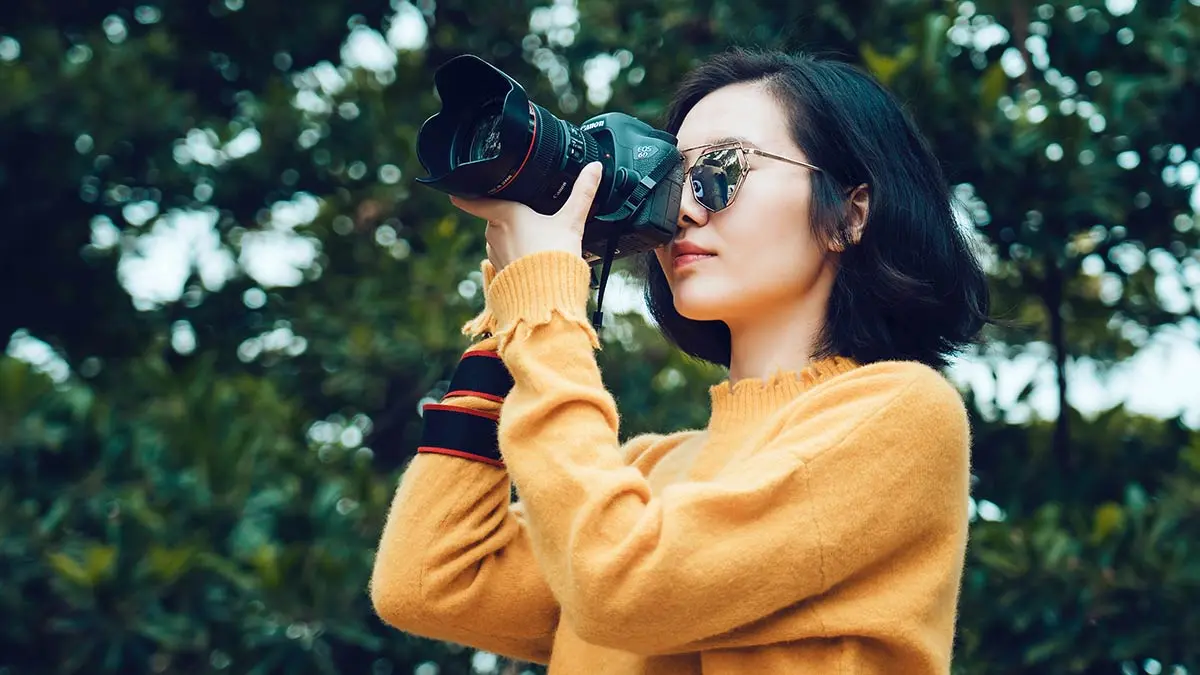
Rather than merely recording scenes with a camera, photography stands as an art form and science all by itself. It also gives voice to storytelling in ways that other mediums can not achieve. Photography, a mirror to history, culture and today, is filled with emotion. From emotions that are inexpressible without a stock phrase to shadowy feelings that can barely be discerned, people have everything to say. Living through fads or crystal spheres as people no longer see History quite as it was – photography records it firsthand. Focusing on totality, it is an art form of now and tomorrow. Photographs can capture the human spirit for all time, but a computer file cannot yet last even a hundred years. Where our civilization will end and what kind of look we can expect to greet in the new century or millennium are things unknowable today.
The Word of Photography
The word photography literally means “painting or drawing with light.” It allows people to pick up a moment, an emotion, thus preserving something as everlifetime’s unchanging minute token. More and more important in modern times, photography has become a widely-accepted form of expression and communication between people from all walks of life. With the technology it takes to make a decent portrait now within almost anyone ’s grasp in today’s world, this major branch of photography is still developing.
The History of Photography
The history of photography has been two hundred years in the making. In the 19th century, early photographs required complex chemical processes for their development. Pioneers like Williams Henry Fox Talbot and Louis Daquerre used new paper to make the first permanent records. From this has been built modern photographic techniques. At first only the wealthy could afford to take photographs. However improvements in science and technology brought the art within reach of everyone.
The 20th century saw significant advances, including roll film photography, colour and pocket cameras. From then on everyday life, special occasions or important events were very easy to capture on film. By the digital technology revolution of the end 20th and early 21st centuries, photography changed completely. Digital cameras, smartphones and editing software allowed for faster photography and made it more flexible. For these reasons, almost everyone is now a photographer. Photography as Art
Photography is an artistic medium that enables people to express their own interpretation and can even be used as a means of telling stories. Conception, lighting, perspective and timing are essential elements that take a simple photograph from the realm of everyday life into fine art. Photographers can use panache to bring out emotions, highlight beauty or stimulate thought through well-constructed pictures.
Vistas in style offers opportunities for creativity Take portrait photography for example, it’s subtle and full of personality. Landscape photography is an art thatreveals nature’s beauty straight to the eye Street photographers use their work to record real life in action; photojournalism brings us news stories in pictures. And macro photographers bring hi-res detail to every tiny part of the world around us! All these styles of photography are downright difficult to master, requiring excellent technique, patience and some artistic inspiration.
This is technology bring a four revolutions to photography. With high resolution digital cameras, drones and smartphones all at hand, arresting images are snapped in a moment. Editing software, such as Adobe’s Photoshop and Lightroom, let photographers can retouch, manipulate and even perfect images with lively precision.
Social media also changes photography into a world-wide stage for creativity these days. Instagram, Pinterest and Tiktok all provide platforms for photographers to show off their work and collect followers from anywhere on the planet. And now, new AI tools powered by computer technologyhelp photographers compose picture frames or suggest edits, extending further the sphere of visual storytelling.
Photography is an universal language that transcends barriers of language, culture and even time. A single image may express emotions, ideas, and narratives more potently than however much text. Photojournalists use photography to record social issues, political events, and humanitarian crises–thereby raising public awareness and inspiring changes for the betterment of all humanity.
In everyday life, photography records life’s most delightful moments such as birthdays, wedding ceremonies, family trips plus all the college years. It allows people restore their memories, hand down tales to their children and leave a lasting legacy for future generations. Because photography has an emotional connection to people no other form of communication does – that is why it still exists now and always will.
Photography as a Tool for Business and Media
Photography is essential to modern business and media. Marketing, advertising and e-commerce all depend on good quality images that look attractive and get the message across. Product photography, branding visual materials as well as social media content are vital to a company’s success in the digital world.
Various news websites, magazines and online platforms also need photography. They use images to chat with audiences as well as inform them. Nevertheless, iconic images from history continue to affect public opinion and form cultural memories. It And people in both commercial and literary journalism contexts need photographers to be creative in addition to their number one job, recording. They need image craft as well as textual craft.
The Future of Photography
Looking to the future, photography promises many further changes. Emerging technologies such as computational photography, AI-driven image enhancement and virtual reality are changing the ways in which images are both captured and experienced. _ There is generally a lack of Aldus software development environment in the modern electronic media industry today while interactive and 3D photography are adding new dimensions to visual storytelling.
And photography has become ever more inclusive and diverse. As technology becomes more easily available to everyone, photography will continue to be a powerful tool for creativity, communication and cultural expression. When people know how to use technology their way, an even wider range of people can participate in the creative process.
Conclusion
Photography is an art, a science, and a way of saving the moments of life. It captures scenes of beauty, tells stories, and generates emotions. It is a human culture essential. Personal use, photographic art, and times of memory Whether for professional purposes or creative expression make us look at the world differently. We need photos to act like this course or book that people use when they go on a walk, it offers new ways of seeing life. Now with our cameras but not so in flash drives, during what would have been a different everyday Xperience our vision is free thanks to online connections and links from one page to another Have you gotten a postcard Already you are living the life of those pictures. As technology develops, photography is growing simultaneously, expanding the range of artistic expression and communication. Photography transforms everyday moments into unforgettable memories and by merging technical expertise with artistry, the twinkling moments of life are then frozen for ever.